Next Gen Summit combats crisis of anxiety with Christ-like compassion
By Lindsey Williams
Writing Specialist
Churches are multi-generational by nature. In 2026, six generations coexist, but they are split apart by polarized upbringings. Educators and next-gen ministers see the stark differences firsthand, but many are struggling to break through the barriers around Gen Z and Gen Alpha. So what is going on?
At the Next Gen Summit, presented by the Discipleship/Sunday School department of the Mississippi Baptist Convention Board (MBCB), guest speaker Cheli Vance addressed the issue as “Anxiety in the Next Generation.” The event was hosted at Ridgecrest Baptist Church, Madison, on Feb. 19.
Vance, who co-leads a young adult Sunday school class at First Baptist Church, Jackson, was recruited through the MBCB Discipleship/Sunday School department from 2008 to 2023 to lead student staffs for summer camps on Mississippi College’s campus. Year after year, she noticed how each new staff showed up less capable than the last.
In 2008, students required little supervision and solved problems on their own. In 2012, Vance realized their interactions and abilities to follow directions had dwindled significantly. By 2023, students were distracted, lacking self-discipline, and unable to compose themselves after a mistake.
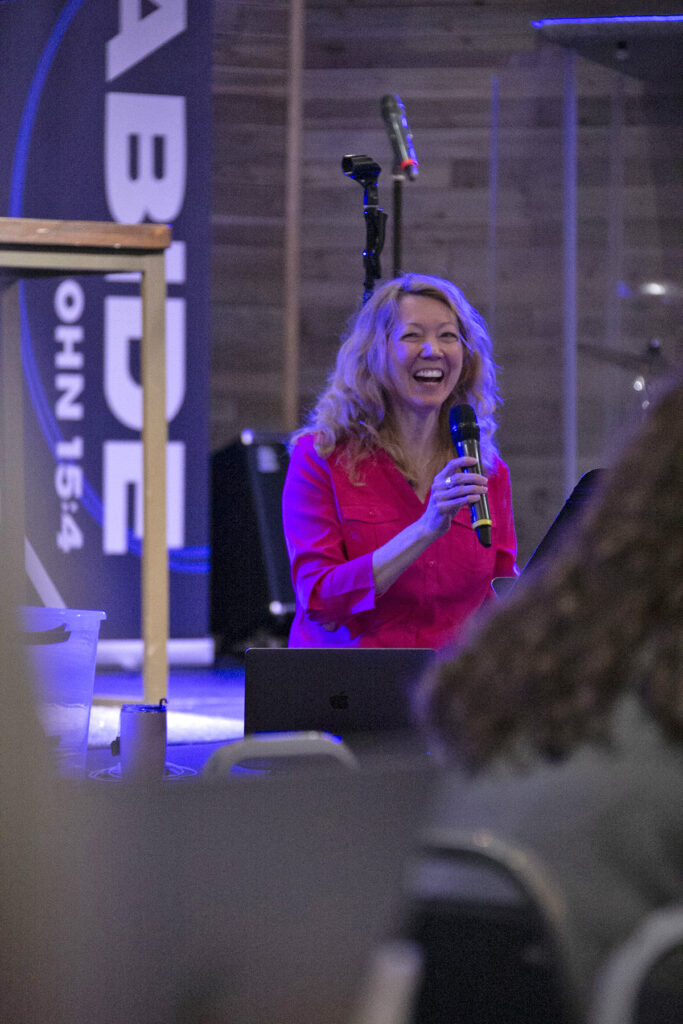
Over the years, Vance had become frustrated with the behaviors her generation often regards as lazy, inept, or rude, until she began to research the younger generations. Soon the real issue was clear: the vast majority of Gen Z and Gen Alpha exist in a crisis of anxiety. What happened, and why are older generations struggling to relate to the younger?
Between generations, the internet, smartphones, and social media were introduced. But is it fair to fully blame screens?
“We view the world through the lens of our childhood without the internet,” Vance explained, “yet we have generations which have never, ever known life without it. Then we have millennials who are stuck in the middle, trying to explain both viewpoints to either side.”
It may appear as though the solution is to fault the phones and advise young people to stay offline, but Vance cautioned attendees from jumping to this criticism. “Gen Z and Gen Alpha are very aware of the harmful effects of technology. They can also tell you all the benefits of it. Younger generations are also aware of how often their parents and grandparents pick up the phone themselves.
“We didn’t get into this situation with technology overnight, and we’re not going to overcome it overnight,” said Vance. “We can’t change the generation people are born into, but we can change how we talk about people in other generations. We can study the generational differences to understand, not to criticize. We also can’t change the importance and necessity of technology in our everyday lives, but what we can change is how and when we personally use technology and how we talk about technology with different generations.”
With a table activity, Vance demonstrated that “tech interference or “phone-snubbing,” the act of focusing on one’s phone instead of paying full attention to the people around you, is not just a Gen Z and Gen Alpha problem – It is an everybody problem.
Somewhere along the way, our interpersonal connections have weakened. “This isn’t just about Gen Z and Gen Alpha,” Vance affirmed. “It’s about all of us, because God has called us to be a Body of believers together.”
Vance said connecting with Gen Z and Gen Alpha involves reframing, relating, rebuilding trust, and retrofitting.
Reframe
Reframing how you perceive and interact with younger generations takes:
- Adaptability: Meet generations where they are and adjust to understand them. They say, “you can’t teach an old dog new tricks”. Every person, however, regardless of age, is constantly adapting to our changing world. Adaptability is the realistic mindset to move forward with the things we can’t change.
- Creativity: Reimagine how we move forward by focusing on what we can change, on opportunities, not limitations.
- Innovation: Think about the areas that don’t seem to be working, and how you can adjust them. Are we providing equipment appropriate to the lived experience of Gen Z and Gen Alpha? What if they just need different equipment to grow and thrive? For the most part, Gen X and Boomer structure doesn’t fit Gen Z and Gen Alpha. Are your students struggling to listen for more than a few minutes? Try scattering activities or table discussions between a Bible lesson. Sometimes students just need to adjust the typical structure to get back on track.
Relate
Relating to younger generations takes seeking to understand, not “fix,” their problems. Vance’s husband, Reid Vance, leads in the teaching of a young adult (Gen Z) Sunday school class at First Baptist Church, Jackson. For the last several weeks, he has taught a series entitled “Be Anxious for Nothing.” When asked what kind of anxieties they experience, the class described:
- A constant comparison, brought about by social media.
- A fear of vulnerability because of potential rejection and judgment.
- A dread for unknowns, especially when worldwide news is always accessible.
- A lack of support, brought about by avoiding comparison, unknowns, and vulnerability.
Rebuild Trust
Older generations, in general, remember living in a “high trust” world, meaning it was easy to trust people in your community and your church. Younger generations, however, operate in a “low trust” world. They have a difficult time trusting the people around them. For most Gen Z and Gen Alpha, a friendly face is not enough to make them feel loved or welcomed. Rebuilding trust from one generation to another involves:
- Listening: Listen to understand. Hold back on preparing what to say next or correcting. Young people often feel dismissed and invisible by the adults in their lives. Ask questions and express genuine interest.
- Integrity: “Do what you say you will do.” When you make mistakes, admit to them and apologize openly. Young people know you’re not perfect and are more ready to respect someone who can admit their mistakes.
- Transparency: Share your experiences in an age-appropriate manner. Share about doubts, mistakes, and people you’ve helped along the way. These conversations help dissolve the boundary between you and young people, especially where your experiences overlap in some way, and they may come to you with tough decisions or struggles later.
- Care: Take time to intentionally reach out, in-person or over text. Send thoughts and write out prayers. Young people know time is a scarce commodity. Intentionally taking time for them shows that you value them. Don’t, however, just be their friends. They need adults who can set boundaries.
“When a young person says something really off the wall, we’re tempted to step in with that Bible verse,” said Vance. “We want to be the expert, the voice of disapproval, because we feel the need to correct them before they make a mistake. That comes from good intentions, but they need attentiveness. They need empathy. They need nonjudgmental responses. Ask something like, ‘Can you tell me a little bit more about that?’ The moment will come when you can redirect them to what the Bible says, to what truth is, but first, we have to understand.
“Jesus accepted us right where we were, whatever pit we were in, and He valued us. When you do this, it allows for an open dialogue without that looming threat of judgment.”
Through these steps to rebuild trust, older generations might find it easier to have “Tech Talks” with Gen Z and Gen Alpha. Vance recommended discussing the topic in this order:
- Benefits of technology
- How, when, and why (we use the internet, social media, etc.)
- Limitations of technology
- Pitfalls of technology
“The church is not dealing with a crisis of care,” Vance affirmed to the audience of next-gen ministers. “You care enough, you’re trying enough, you’re working hard enough. But what we’re dealing with mainly is a lack of understanding the difference between our generations. We keep expecting our high-trust tools to work in a low-trust world, and they don’t. That doesn’t mean we have to throw those tools away. Maybe we just need to dust them off and sharpen them.”
Retrofit
What’s missing? After the pandemic, researchers are still trying to grasp the social effects it had on young people. At what was supposed to be the most social time of many young peoples’ lives, students were quarantined and distanced. Many Gen Z and Gen Alpha just need the opportunity to recover without judgment. Retrofitting mirrors the principles of developing disciples:
- Ask students to help you with a task (even if you know what you’re doing and can do it faster alone).
- Look for progress, not perfection.
- Model resilience and tech hygiene. If you “flop,” show them how you regulate and recover after failure or conflict. Be aware of how, when, and why you use your phone.
- Provide opportunities for young people to grow with guidance.
- Create spaces for intergenerational interaction. Invite other generations to get involved with your ministry.
To show what it looks like to retrofit, Vance invited two Gen Z adults from her Sunday school class for a Q&A about their own anxiety. Attendees listened attentively and supportively.
In closing, a panel discussion led by Neil and Amanda Tullos, pastor of First Baptist Church Wiggins and educator, Zach DePriest, MBCB Student Ministries Consultant, and Angie Boydstun, MBCB Preschool/Children’s Ministry Consultant, answered questions around anxiety, neurodivergence, and walking alongside parents in next-gen ministry.
Your gifts to the Cooperative Program make it possible for the Discipleship/Sunday School department to assist Mississippi Baptists to continue reaching the next generation.