
By Lindsey Carraway
Writing Specialist
Most people picture chaplains as the pastors praying in hospital rooms or the ministers meeting the needs of disaster victims. Lesser known, however, are the chaplains who cross police lines to respond to the heavy load of stress carried by first responders.
Firefighters, police officers, paramedics — the men and women who protect the public in the face of danger — encounter disturbing scenes and are expected to remain calm no matter the situation. Chaplains of the Department of Public Safety (DPS), however, know that everyone needs a safe place to unload their burdens.
Someone who gets it
One of those chaplains, John Temple has served in various forms of chaplaincy ministry for the past fifty years. As a pastor, he had the opportunity to help start a hospice program for his community, which began his calling to chaplaincy. After moving to pastor in Meridian, policemen in his church asked Temple to consider serving as a chaplain for their patrolmen. He ended up serving seven years with the police department and 11 years with the sheriff’s department before his retirement in May of this year.
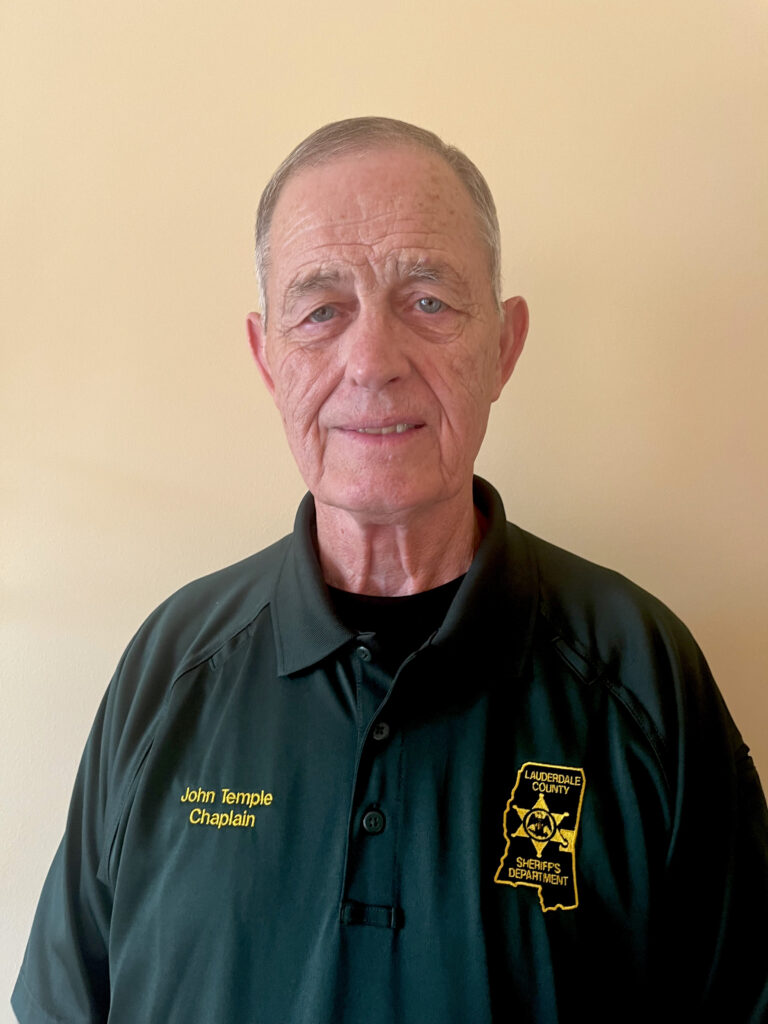
Temple has also volunteered as a chaplain with the Mississippi Baptist Disaster Relief (MSBDR) and as a backup hospital chaplain. During a deployment with the MSBDR in 2012, he responded to the devastating school shooting in Newtown, Connecticut, where 26 people were shot and killed by the perpetrator. Twenty of the victims were children between six and seven years old.
“I had gotten permission to carry my policeman uniform with me,” said Temple, recalling the tragedy. “In three days, I went to twelve first and second graders’ funerals. I talked with the law enforcement out front. They were so stressed that in the next 18 months, they lost as much as 40% of their personnel. But because I had a uniform, I could cross the police line and be seen as credible to talk to them. If I had walked up in a coat and tie, they wouldn’t have said anything to me. With tragedies like that, I feel that we as DPS chaplains can really make a difference.”
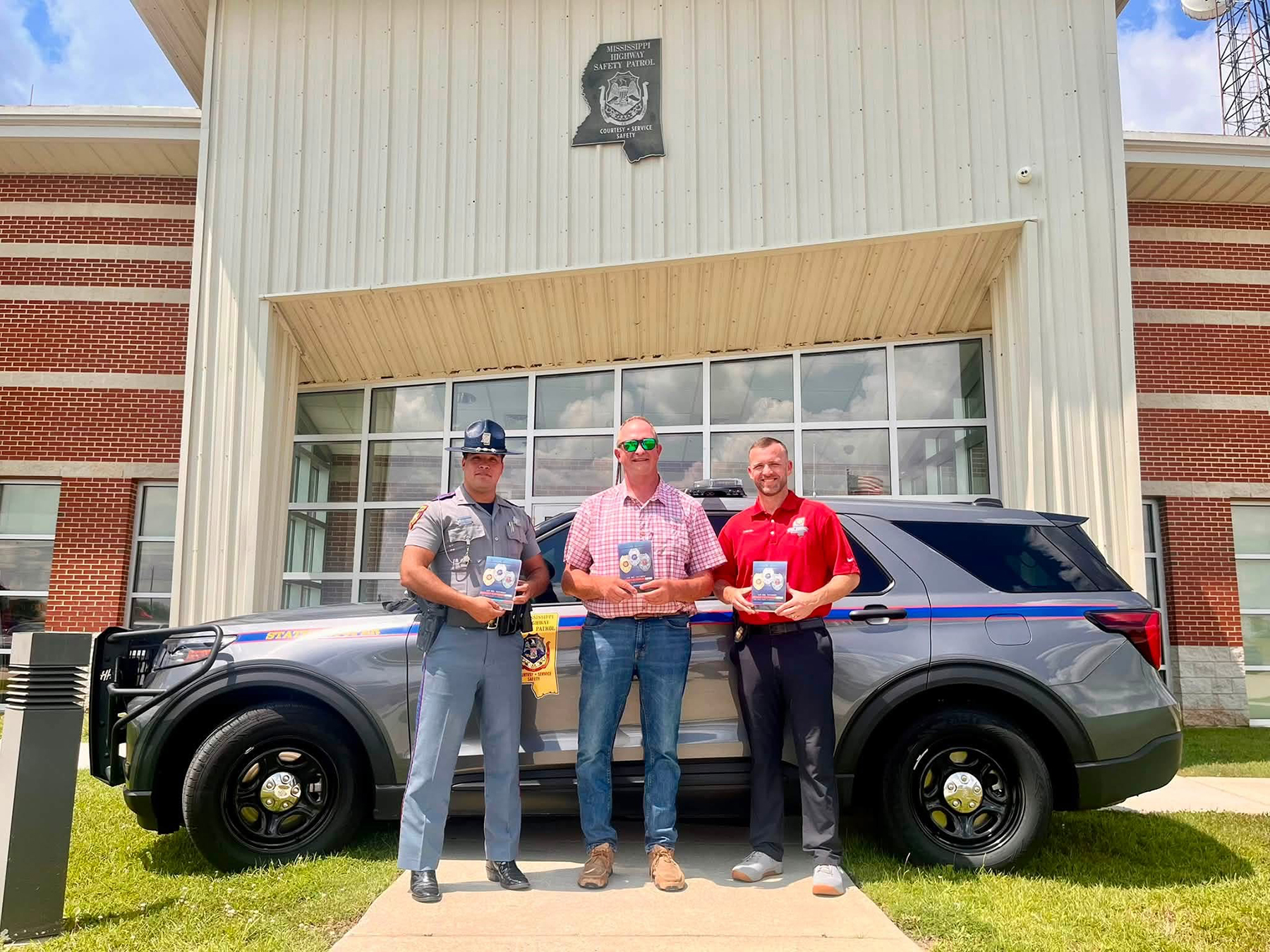
“We have received a significant amount of testimony that the men and women we are ministering to are thankful to have somebody who wears a badge,” said Chase Elkins, who has served as DPS chaplain for two years on the Gulf Coast.
Elkins began serving in church ministry twenty years ago but has always had a passion in his heart for law enforcement. Five years later, a door opened for him to join the police academy where he was voted as the chaplain for his patrol school. After working in highway patrol for several years, he moved into the public affairs division, which eventually presented the opportunity for Elkins to become a full-time chaplain.
“For the folks who have responded to those difficult scenes behind the crime tape, it’s a relief to share their burdens with someone who gets it,” Elkins affirmed. “They more freely express themselves because they can go into detail and it’s understood. That’s the advantage we have in the first responder chaplaincy program through DPS; we can talk to them on a level that nobody else can because we’ve walked in their shoes.”
The first step
Every situation and person is unique. Especially after a traumatic event, there is no formula for the right words to say. In fact, Elkins stated that one of the most effective tools for chaplaincy is active listening without interruption.
Ministering to the first responder, said Elkins, starts like any ministry: earning trust. With officers, that trust is often earned through a “test.”
“The way you earn their credibility is you ride with them and they will test you out,” Temple explained. “They may tell you something that’s confidential, but it won’t matter if it gets out. Then they’ll see if you tell somebody. They’ll put you in a situation that’s kind of difficult to see how you respond. But when they come to trust you, you become their pastor. And you’re not only pastor for them, but pastor for their whole family.”
Temple compared chaplaincy to the parable of the Good Samaritan: the Samaritan approached the man in time of need and tragedy, tended to what he could, but was not the final solution. In the end, the Samaritan brought the man to another capable and trustworthy person. Similarly, chaplains are rarely the last step. They often direct people to other resources necessary for their wellbeing.
Presently, the biggest challenge for DPS chaplains is raising awareness of their availability and presence. Fifteen full-time DPS chaplains serve across the state, with at least one in each of their nine districts.
“If we could get our information out to the general first responder world,” said Elkins, “to give them an opportunity to reach out if any one of them is going through a battle or a heavy situation, that would be a tremendous help for us to be able to be utilized to the greatest of our ability.”
Elkins noted that people have a difficult time admitting when they need help when it comes to mental and emotional health. Adding a first responder’s responsibility on top of that creates a wider relatability barrier: many men and women in law enforcement cannot see a pastor or counselor understanding what they deal with day-to-day. That is why having experience, and confidentiality most of all, is so important.
DPS chaplains, of course, are not immune to fighting their own battles or struggling with the weight of their work. Temple has had the same accountability partner, another chaplain, since 1984. They frequently check in on one another. “If you deal with stress and tragedy and pain, you’ve got to have a place where you can unload it,” said Temple. “Pastoring is the same way.”
“The Mississippi Baptist Convention has also really opened their doors and provided an opportunity for us to be able to lean on several of their administrators,” Elkins added. “Having that regular contact and those monthly meetings really help us to be able to shift some of the weight in our life.”
Elkins referenced Matthew 11 and 1 Peter 5 where Scripture invites us to bring our burdens to Jesus. “The people who are carrying their burdens and don’t have that knowledge, they’re depending on us to point them in that direction and help carry some of that. Between our mentors, the people pouring into us, our individual prayer time, Bible time, and personal spiritual growth, those are the primary resources we have to carry the weight and deal with the burdens and heaviness of not only chaplaincy, but life.”
A good ride
At 75 years old with over 50 years of ministry behind him, Temple says, “It’s been a good ride.” He believes chaplaincy enhanced his pastoral work, with the greatest impacts being outside the doors of the church and out on the street.
The churches Temple served always supported his chaplaincy and local law enforcement, instilling policies which helped officers secure hotel rooms for unhoused or stranded people. They also reserved the back pews for local law enforcement, who had to remain geared up and ready to leave at a moment’s notice, should a call reach their radios.
“They would come and go,” said Temple, describing the officers not as a disruption but as a welcome sight. “It gave a connection of the law enforcement with the church and the church with the law enforcement.”
Although Temple is closing the door on many years of faithful ministry, chaplains like Elkins continue to drive forward with that same respect and compassion into the next fifty years.
“When trust is established,” said Elkins, “then we’re able to see lives changed and families moved, and people recover from significant difficulties. Being able to see some of that unfold has been heartwarming. We have been able to see people come out of depression, marriages restored, and men and women turn from unhealthy coping mechanisms to healthier resources and the institutions that God created first in family.”
To get in contact with a chaplain, you can call any Mississippi Department of Public Safety number, regardless of the agency. If you know a first responder of any kind, we encourage you to share this information with them.
Your gifts to the Cooperative Program equip and encourage chaplains to take the hope and healing power of the Gospel across Mississippi. For more information contact Don Lum at dlum@mbcb.org.






Comments are closed.