
By Chip Stevens
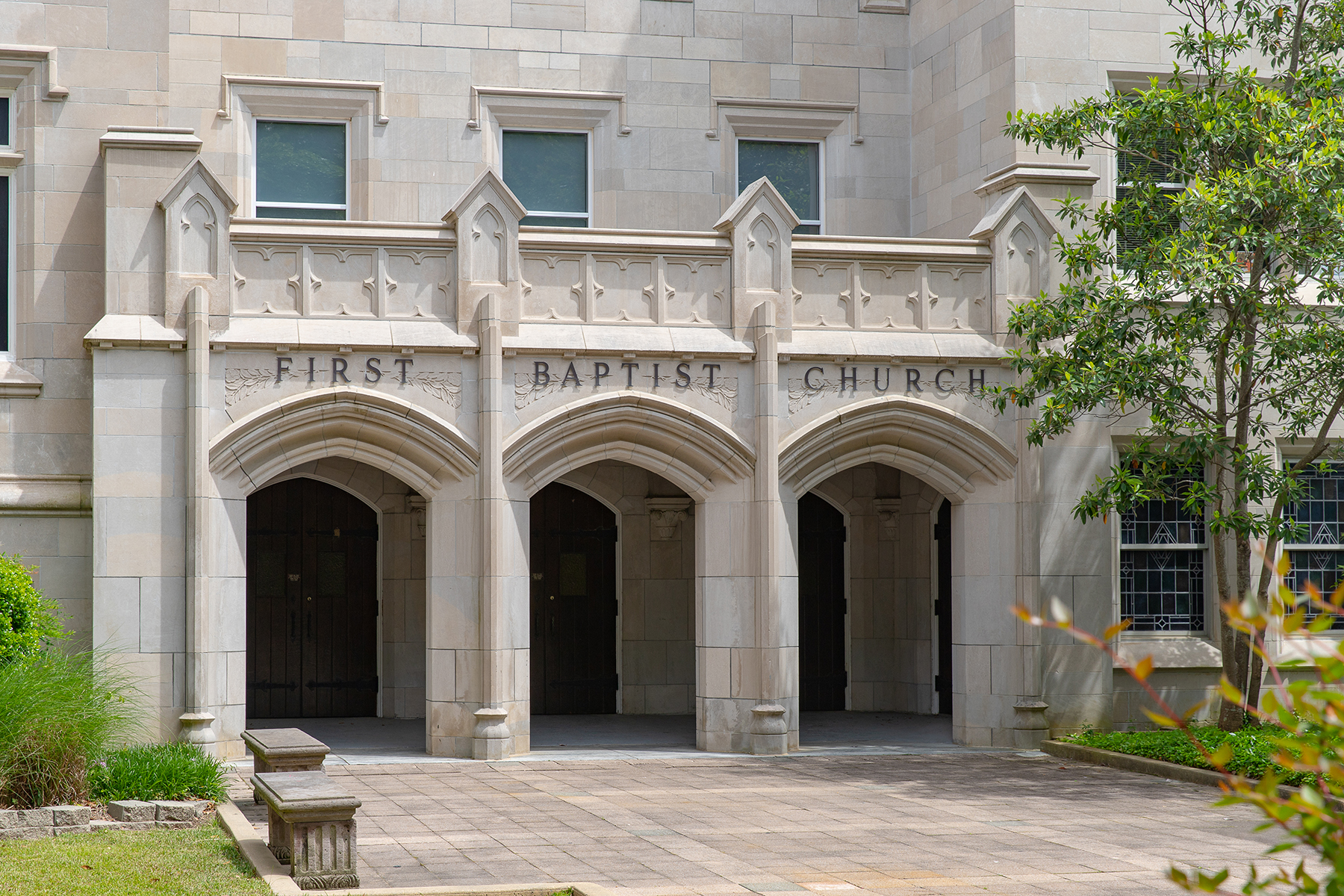
Ok. I’ll admit it — I’m biased. In fact, for me, it’s personal. I love the First Baptist Church. In fact, I’ve only served in vocational ministry in a First Baptist Church. Currently, I serve as the Senior Pastor of First Baptist Church, Jackson, a church that began in 1838. I love the people; I love the history; I love the beauty of the facility; and I love the fact that we’re located downtown as a lot of First Baptist Churches are. At the same time, I know that everybody doesn’t want to serve at a First Baptist Church.
If you’re one of those people, I understand. When you think of a First Baptist Church, you think of church committees, deacons, Sunday night services, Sunday School, traditions, and people of every age group who all have opinions they like to express. Sure, that describes a lot of First Baptist Churches — including every one I’ve served — but I love all of those things.
Granted, we’ve all seen power struggles in churches as people fight to have church the way they want it. I’ll admit there have been times when I’ve been in the midst of a challenging situation and wondered what it would be like to pastor a church that didn’t have all those processes and programs, but at the end of the day I wouldn’t have it any other way. In fact, I believe if you saw the value those things bring, you might think differently too.
Let’s start with church committees. When you think of committees, you probably think of two words: “politics” and “slow.” Here’s the two words that I think about: “accountability” and “discipleship.” I do believe churches can have too many committees, but some committees play vital roles. Committees — like personnel and finance — give the pastor and staff checks and balances that prevent potential problems.
Meeting with a committee is also an opportunity for a pastor to disciple the people on the committee by helping them see how God is working and to teach them how to respond. A church member’s default is to look at a committee much like they would a committee at their job. There is some overlap and things that we as pastors can learn, but a church is also different in our motives and measurables.
Think with me about deacons. Some of you may have heard horror stories about deacons. When you think of deacons, you may think of one word: “control.” Think of this one: “partners.” I’ve always made it a mission to get to know the deacons — not just at church, but outside of church as well. When you really get to know somebody, you understand why they think the way they do. You learn to see how valuable they are to the team because of their unique perspective.
I tell the deacons at FBJ that their number one job is unity and that unity usually comes from effective communication. I explain that many people in the church may not come to me with their concerns or fears, but they will come to them. When they are well-informed and can communicate leadership decisions effectively, trust is built in a congregation.
Now, let’s think through Sunday nights. Maybe, like me, you grew up in a Christian home and you always had to go to church on Sunday nights. In fact, you may have been at church for three or four hours on a Sunday night each week and, let’s face it, you may have hated it. In your opinion, people have moved on from that way of thinking. People are just too busy these days. When you think of Sunday nights, you may think, “outdated.” I think, “opportunity.” What I’ve found in twenty-five years of serving as a pastor is that people aren’t against Sunday nights; they’re just against going every Sunday night “just to go.”
At FBJ, we do three seasons of Sunday nights. In fact, it’s a part of our overall discipleship strategy. We do a six-week study in the fall on a Book of the Bible. In the winter, we do a three-week doctrine study in each of the three main counties we serve (we take discipleship to their area). In the summer, we do a three to four-week spiritual formation study (since it’s summer, we add in games and a free dinner). Each season, we’re only asking for a certain amount of their time and we guarantee that it will be worth it. We have huge crowds on Sunday nights. The idea that Sunday nights are dead is just wrong.
Sunday School may make you think, “old-fashioned.” I think, “connection.” Sunday School is where a large church can feel smaller. It’s a place where people can meet people in a similar stage of life who are trying to live for Christ like they are. It’s what helps people stick.
In a First Baptist Church, Sunday School often happens on-site on Sunday mornings. We tell people that we believe so strongly in the importance of Sunday School that we have invested a lot of money in being able to provide space for the whole family to be involved. We’ve found that people actually find it refreshing to know they can come with their family on a set day of the week to a set place and a set time for meaningful connection.
Every First Baptist Church has her traditions. We have our share at FBJ. Some people look at traditions and think, “irrelevant.” We look at them and think, “unique.” Traditions are what make churches unique. One of our traditions at FBJ is Carols by Candlelight. We’ve been doing it for over 50 years. Yes, it’s a lot of work. Yes, it costs a lot of money. But do you know what else it does? It gets a whole lot of people working together on the common goal of presenting the Gospel to our community. That’s a great thing!
Finally, a lot of First Baptist Churches have people of all different age groups. That can cause clashes between the generations. Some people may instantly think, “drama.” We prefer to think, “family.” We believe church should look like family — young people, older people, and middle-aged people. Sometimes we get along and sometimes we don’t, but family always pulls together when it matters.
These are just some of the reasons I love a First Baptist Church. I could give you more, but I’m running out of space. Now listen, I want you to know that I believe it takes all kinds of churches to reach all kinds of people. You may never be called to a First Baptist Church and that’s OK. Sure, there are lots of unique challenges, but my experience has been that when a First Baptist Church really gets it right, not only is a difference made in the community, but other churches are encouraged as well.
Go where God calls you to go, but don’t give up on the First Baptist Church.
Stevens is the pastor of First Baptist Church, Jackson. This article first appeared on caskeycenter.org.




Comments are closed.