
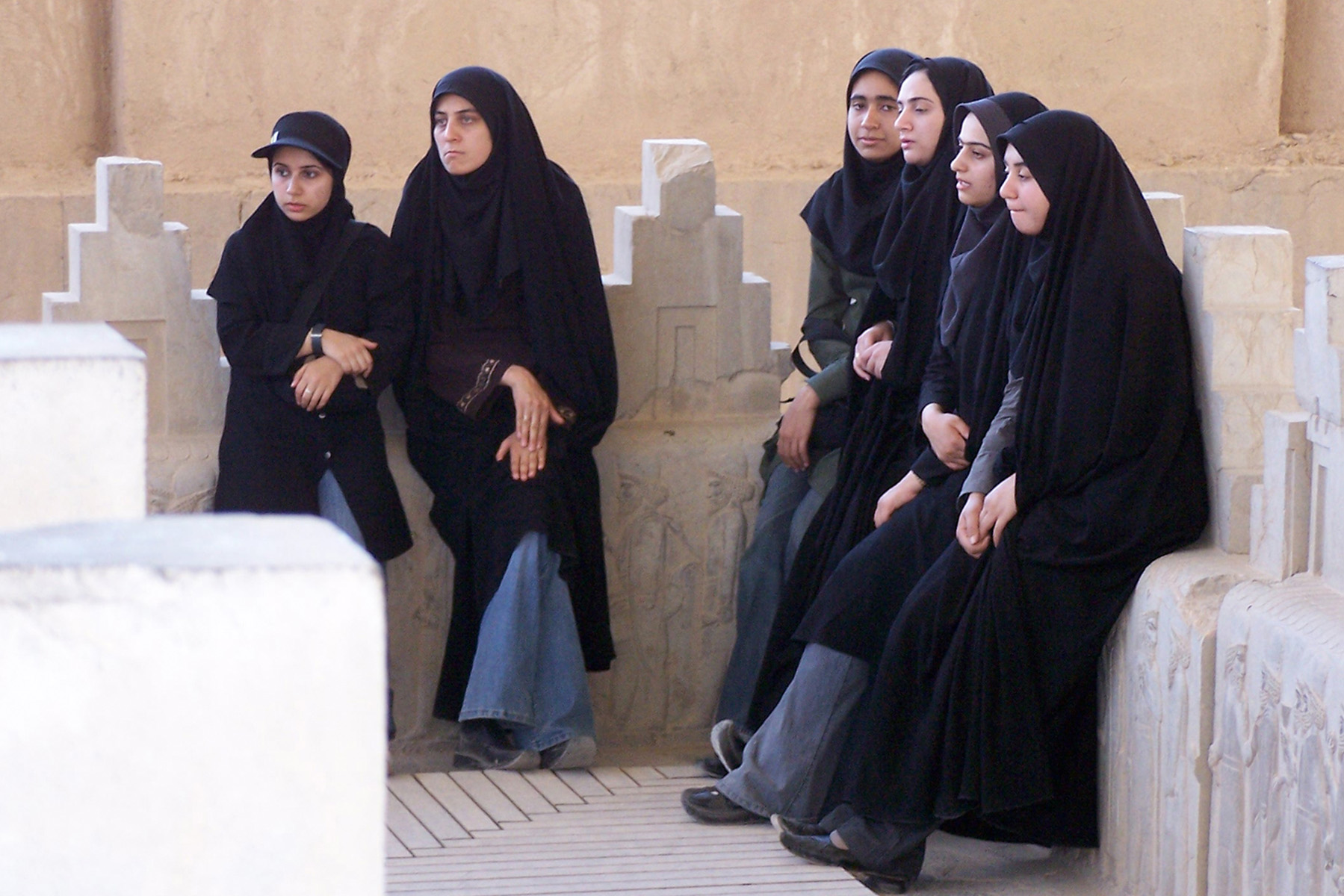
With the present war involving Iran, the United States and surrounding countries, a closer look at the history of Christianity in Iran may help place these events in context and guide believers in how to pray for Christians living there. Throughout Iran’s history with Christianity, there has been sporadic discrimination against and persecution of believers. When outside forces threaten Iran, the relationship between Iranian Christians and the ruling government has often changed.
Beginnings of Christianity in Iran
The lands of greater Iran appear frequently in the Old Testament. Eleven books directly reference the region or its peoples. The Iranian government displays Bibles in museums that date back hundreds of years and promotes the idea that the tombs of Old Testament figures such as Daniel, Esther and Mordecai are located within its borders, along with the tombs of Persian rulers Cyrus the Great, Darius the Great, Xerxes and Artaxerxes.
In the Old Testament, Persians often play a positive role in God’s plan for Israel. Cyrus the Great, for example, is used as a type of Christ and is called a “servant,” a title used for Davidic kings. Even more significant is his designation as the Lord’s “messiah” or “anointed one” in Isaiah 45:1. Compared with other non-Jewish nations, the Old Testament portrayal of the Persians is largely affirming.
Some scholars believe the Magi who followed the star to Jesus (Matthew 2:1-11) came from greater Iran and may have been Zoroastrian priests. The book of Acts also mentions Jews from Parthia, Media and Elam — tribes in Iran — who were present at Pentecost and heard the apostle Peter’s sermon (Acts 2:9). Church tradition further suggests that several apostles, including Matthew, Jude, Simon the Zealot, Bartholomew and Thomas, had contact with the region.
Historians generally agree that Christianity has existed continuously in Iran since the earliest centuries of the faith. Christians were present by the A.D. 100s, and some believers even fled Roman persecution by moving into Iranian territory. By the early 200s, Christians had become numerous enough for the state to view them as a security concern.
Archaeological discoveries support this early presence. On an island in the Persian Gulf, 60 Christian tombs have been discovered alongside the remains of a church. In other parts of Iran, church structures with baptistries have been found. Before Constantine legalized Christianity in the Roman Empire, there were already 20 bishoprics in Iranian territories, showing that the church had grown significantly.
Christianity under empires
After Emperor Constantine legalized Christianity in the Roman Empire, the faith became associated with Rome. Because Rome and Iran were often at war, Christians in Iran were sometimes viewed as potential allies of the enemy. During these conflicts, persecution increased and thousands of Christians were killed.
Despite this suffering, the church expanded. By the end of the seventh century, western Iran was largely Christian. Many believers were highly educated and served as administrators, translators and physicians. More than 100 bishoprics existed, and 18 of the empire’s 25 provinces had been evangelized or had some Christian witness.
Following the Muslim conquest of the region, Islam displayed varying degrees of tolerance toward Christianity. Christians often maintained their faith while acknowledging the authority of Islamic rule. Although their numbers declined, Christianity remained influential. Christian educational and medical centers flourished, and Christians continued serving as translators, philosophers and physicians. For centuries, Iranian Christians also sent missionaries throughout Asia, including to India, China, Tibet and Sri Lanka.
When the Mongols conquered Iran, they initially lifted many restrictions on Christians. However, attitudes changed during the Crusades. Around 1400 the Mongol ruler Timur (Tamerlane) killed thousands of Christians and destroyed churches and schools, leaving only a few Christian enclaves in western Iran.
In the 1500s the Iranian government relocated Armenians to Iran. Armenians became the largest Christian group in the country and established the first printing press in Iran, printing the book of Psalms. Although their privileges later declined, their continued presence showed that Christianity remained part of Iran’s history.
The modern era
In the modern period, Protestant missionaries entered Iran and built schools and medical institutions that contributed to the country’s development. Literacy increased and health care improved, though Western social progress was sometimes confused with the message of the Gospel.
Some missionaries gained deep respect among Iranians. Howard Baskerville, a Presbyterian missionary, fought alongside Iranians and died in battle at age 24. Samuel Jordan spent more than 40 years educating thousands of Iranians and founded the American College of Tehran.
During the rule of Mohammad Reza Shah, Western missionaries experienced greater freedom to conduct evangelistic work. However, the Shah’s growing unpopularity among Iranians also affected those associated with him, including Western missionaries.
After the Islamic Revolution of 1979, most Western institutions and missionaries were forced to leave the country. Although Christians are protected under Article 13 of Iran’s constitution, they are often treated as second-class citizens. The government has largely tolerated quiet expressions of Christianity but opposed more active evangelism.
While persecution restricted registered churches, it also led to the growth of house churches. Since the Islamic Republic began, the number of Bible-believing Christians in Iran has grown from around 3,000 to between 200,000 and more than 1 million, many from Muslim backgrounds.
How to pray through the war with Iran
Throughout Iran’s history, the treatment of Christians has often been influenced by outside political pressures and internal government concerns. Yet the growth of Christianity during times of persecution mirrors patterns seen earlier in Iranian history. This history provides guidance for how believers today can pray.
1. Pray for clarity about Christianity.
Because Western nations are often viewed as Christian, some assume political actions represent the Christian faith. Pray this misunderstanding is corrected and that believers are not harmed because of it. Pray also that missionaries will have opportunities to share the Gospel.
2. Pray that God uses hardship for spiritual awakening.
The history of Christianity in Iran shows that God can use difficult circumstances to bring spiritual awakening. Pray this occurs not only in Iran but also in Israel, the Levant, and the Gulf states.
3. Pray for Iranian refugees.
Many Iranians fleeing conflict travel first to Türkiye and Armenia. Pray for missionaries ministering there as they share Christ and care for refugees who may be spiritually open but also deeply traumatized.
4. Pray for world leaders.
Pray for the salvation of leaders in Iran, Israel, the Levant, the United States and the Gulf states. Pray that peace will prevail and the war will end soon.






Comments are closed.