
By Jerome Coleman
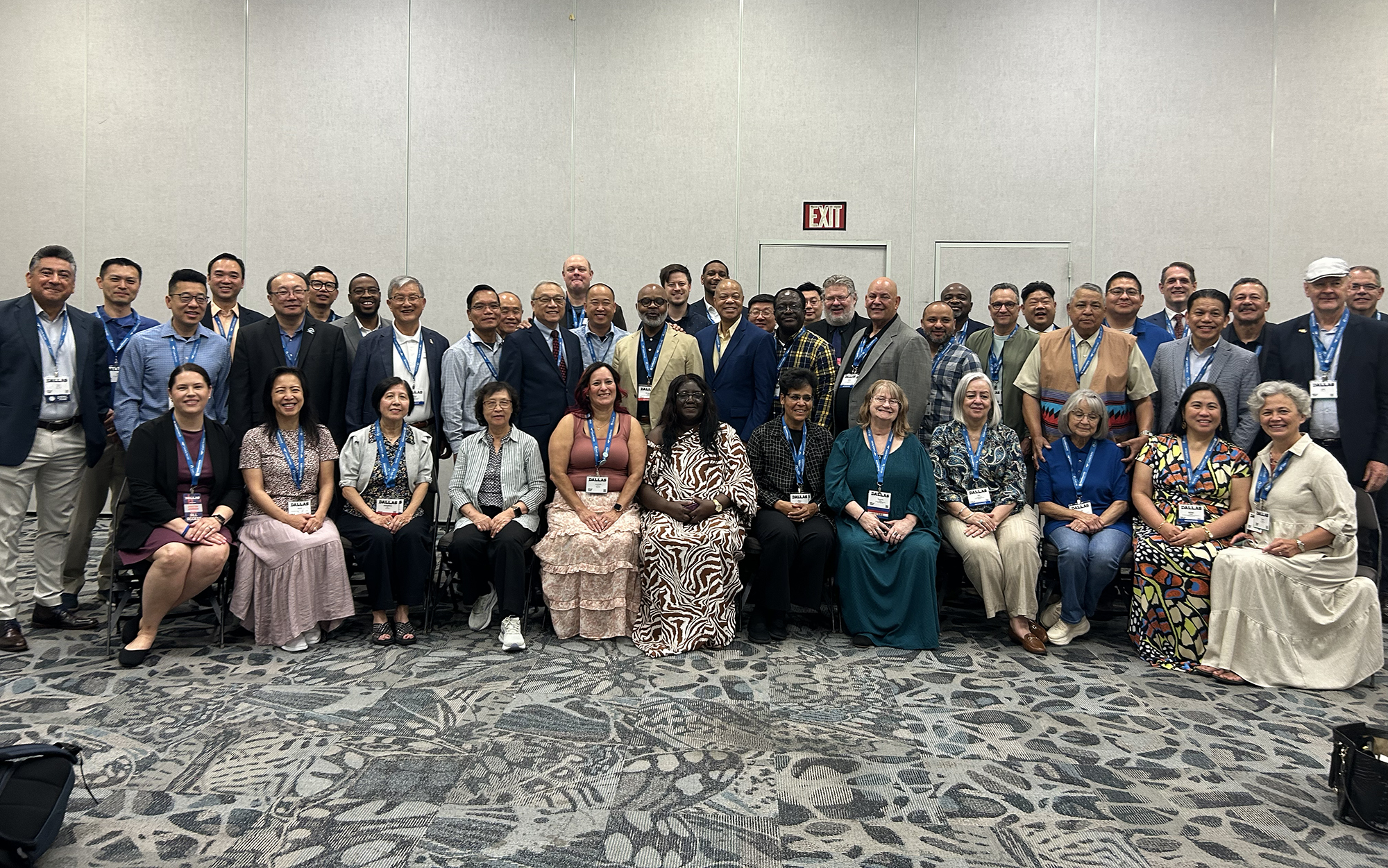
On any given Sunday, Southern Baptists worship God in more than 100 different languages. Nearly one-fourth of our congregations are predominantly non-Anglo. We are becoming an increasingly diverse convention, and that diversity is one of God’s gifts to us.
That diversity is not just something to celebrate. It is something we need.
New Testament scholar Mark Allan Powell demonstrated why through an experiment involving Jesus’ parable of the Prodigal Son, which he recounts in “What Do They Hear? Bridging the Gap Between Pulpit and Pew” (Abingdon Press, 2007). Powell asked 100 Americans to read Luke 15:11-32 and then retell the story from memory. All 100 remembered that the younger son squandered his inheritance. Yet only six remembered that “a severe famine struck that country” (Luke 15:14).
When Powell conducted the exercise with 50 people in St. Petersburg, Russia, the results were dramatically different. Forty-two remembered the famine, while only 17 mentioned the squandering of the inheritance.
Later, while discussing the parable with seminary students in Tanzania, Powell encountered yet another perspective. When asked why the young man was starving, 80 percent pointed to something neither group had emphasized: “no one would give him anything” (Luke 15:16).
The Americans saw the consequences of the son’s choices: he wasted what he had.
The Russians saw the circumstances surrounding the son: a famine struck the land.
The Tanzanians saw the failure of the community around the son: no one gave him anything.
And all three saw something that was actually in the Bible.
The lens of culture
The lesson is not that Scripture means whatever our culture says it means. Quite the opposite. The text remains the text. The son squandered his inheritance. A famine devastated the country. And no one gave him anything. Luke tells us all three.
But culture influences what we notice.
American individualism may make us particularly attentive to personal responsibility and the consequences of individual choices. Russian historical experience may make famine and circumstances beyond our control difficult to overlook. The communal orientation of the Tanzanian culture may make the statement “no one would give him anything” especially significant.
Most of us do not consciously choose our culture. We grow up in it. We absorb its assumptions, values, and ways of looking at the world until what is cultural simply feels normal. And inevitably, we bring some of those assumptions with us when we open our Bibles.
The sufficiency of Scripture, not culture
That is precisely why we need the whole church when we read Scripture.
Sometimes another believer does not read something into the text that isn’t there. They simply see something in the text that has been there all along — something my own cultural experience has caused me to overlook.
This is one of the great gifts of the growing diversity of the Southern Baptist Convention. But receiving that gift requires us to understand that diversity is more than different faces in the same room. Genuine cultural diversity brings different experiences, different questions and sometimes different ways of seeing and applying what we all confess to be the authoritative Word of God.
We should not fear that. We should listen to one another. Acts 15 gives us a picture of the church doing just that. Faced with a difficult question that threatened the fellowship of the church, the apostles and elders gathered, listened to testimony, considered what God had done, heard the Scriptures and discerned together how the church should move forward. Their differences did not make listening less important; they made listening necessary.
Our African American churches need our Anglo churches. Our Anglo churches need our Hispanic churches. Our Hispanic churches need our Asian churches. We need our Native American churches. We need our Haitian brothers and sisters. Our established churches need our immigrant churches. We need brothers and sisters whose experiences differ from our own.
Not because Scripture is insufficient.
We need one another because Scripture is sufficient, but none of our cultures is.
No culture has a monopoly on seeing everything that is in Scripture. Sometimes God uses a brother or sister from a different culture to help us see what He placed in His Word all along.
Coleman is pastor of First Baptist Church of Crestmont in Willow Grove, Pa., and president of the National African American Fellowship, SBC.