By Tony Martin
Editor
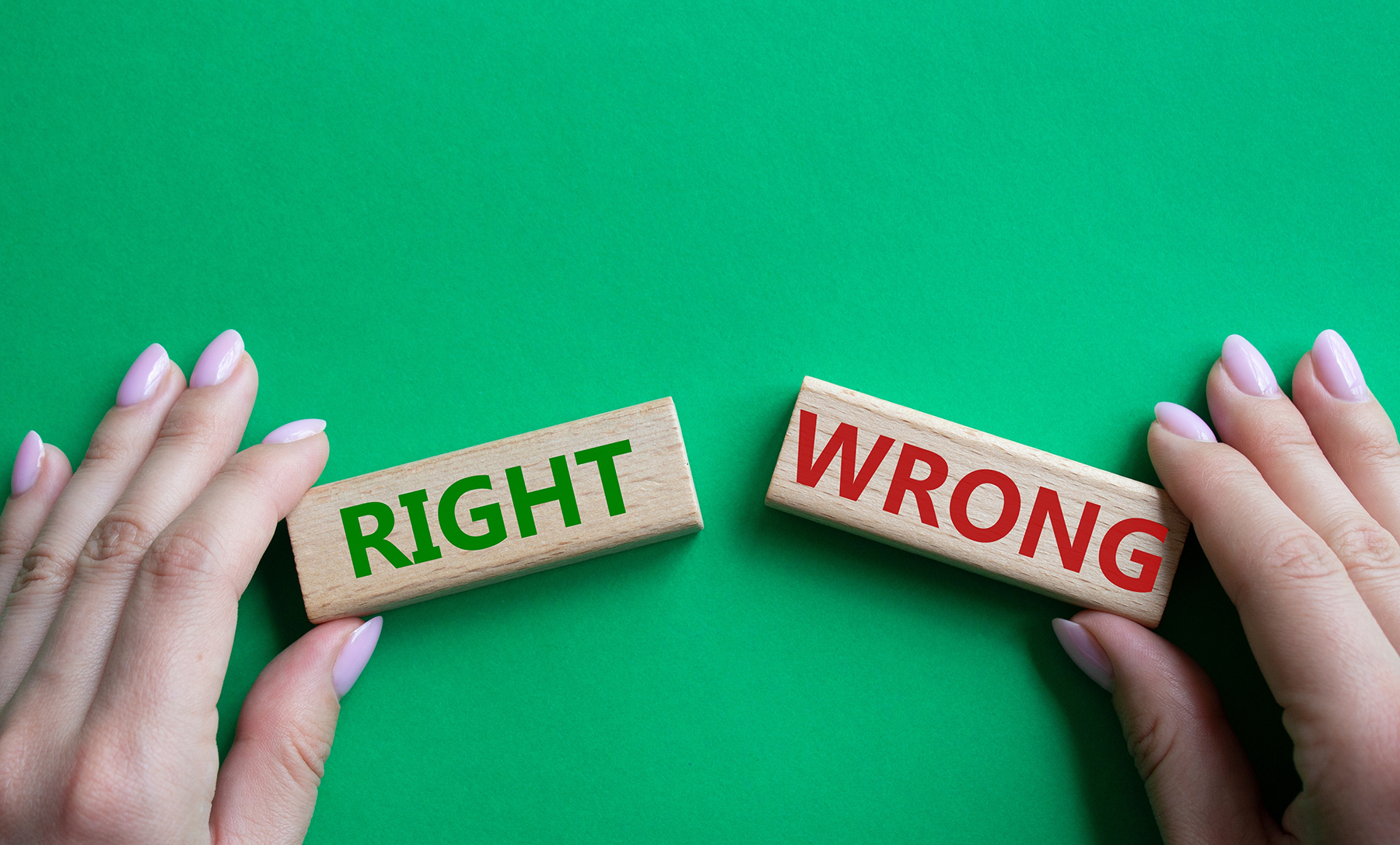
Scroll through the news or your social media feed for five minutes and it’s obvious: we are not on the same page as a country. We’re divided over politics, race, money, sexuality, education, you name it. Everyone seems convinced they’re on the side of “right” and the people who disagree with them are obviously on the side of “wrong.”
But here’s the uncomfortable question underneath all that shouting:
Who gets to decide what’s actually right and wrong?
If we take God out of the picture, the honest answer is pretty simple: nobody. Without God, there is no absolute right or wrong. There is only preference.
You can say, “I think this is right,” and I can say, “I think that’s wrong,” but at the end of the day, they’re just opinions sitting side by side. And if one person says something is right and another says it’s wrong, those opinions cancel each other out unless both of them can appeal to a higher authority.
If there is no God — no Creator, no moral Lawgiver — then “right” and “wrong” are just words we use to dress up what we happen to like or dislike.
The danger of “everyone did what was right in his own eyes”
There’s a haunting verse at the end of the book of Judges:
“Everyone did what was right in his own eyes.”
— Judges 21:25 (ESV)
That could be a summary of modern life, couldn’t it?
You have your truth, I have my truth, and as long as we’re sincere, nobody’s allowed to question it.
The problem is, “my truth” eventually bumps into “your truth.”
- Your truth says this lifestyle is good.
- My truth says this lifestyle is destructive.
Now what?
Someone will shout louder. Someone will gather more followers. Someone will pass more laws. But if we’ve rejected God as the ultimate standard, all we’re left with is power struggles and hurt feelings. Whoever wins the argument gets to label themselves “right” and the other side “wrong,” but underneath it all, nothing really changed. It’s still just human preference wearing a moral mask.
Why God matters for everyday life
We usually talk about needing God for salvation — and we absolutely do. But we also need God for the normal, everyday functioning of society.
God doesn’t just offer us a ticket to heaven; He gives us a moral framework for earth.
- He tells us that human life is valuable because we’re made in His image (Genesis 1:27).
- He tells us that loving our neighbor is not a suggestion; it’s a command (Matthew 22:39).
- He tells us what’s evil and what’s good, not to ruin our fun, but to protect our souls (Micah 6:8; Romans 12:9).
Without that anchor, we drift. What used to be obviously wrong becomes “complicated.” What used to be clearly good becomes “just your opinion.”
Isaiah warned about this a long time ago:
“Woe to those who call evil good and good evil,
who put darkness for light and light for darkness…”
— Isaiah 5:20 (ESV)
That’s where a God-less definition of morality eventually takes us.
A hard but helpful question
Here’s a sobering question that has been nagging at me: If everyone were exactly like me, what kind of society would we have?
Forget the people you argue with on TV or online. Don’t think about “those people” on the other side of your favorite issue. Think about you.
- If everyone handled money the way you do, would society be generous or greedy?
- If everyone spoke to others the way you do, would our conversations be gentle or harsh?
- If everyone treated church like you do, would the body of Christ be strong or weak?
- If everyone consumed media like you do, would minds be filled with light or with junk?
That question has a way of stripping away the excuses. It’s easy to say, “This country is a mess,” and wag our heads. It’s harder to say, “Lord, start with me.”
Jesus warned us about this when He talked about the log in our own eye and the speck in our brother’s (Matthew 7:3–5). Before I worry about fixing “those people,” I need to ask what’s going on in my own heart.
So what do we do?
We can’t single-handedly fix all the division in our country. But we can decide what kind of men and women we’re going to be in the middle of it.
Here are a few places to start:
- Return to God as the standard.
Make up your mind that right and wrong are not up for a vote. Let Scripture, not social media or political parties, define what is good and what is evil. - Let God search your heart first.
Pray like David did: “Search me, O God, and know my heart!” (Psalm 139:23). Ask Him to show you where your own attitudes and actions don’t line up with His. - Live grace and truth together.
Jesus came “full of grace and truth” (John 1:14). We don’t have to choose between being kind and being honest—we’re called to both. Hold God’s standards firmly, but hold people gently. - Practice the “everyone like me” test.
In your words, spending, serving, and posting online, pause and ask: “If everyone did this the way I’m about to… would the world look more like Jesus or less?” - Pray for our country — not just your side.
Pray for leaders you like and leaders you don’t. Pray for God’s mercy, wisdom, and revival. We’re not spectators; we’re intercessors.
At the end of the day, the hope for our divided nation isn’t that my side wins. The hope is that God’s will is done, on earth as it is in heaven (Matthew 6:10). And that starts in the one place you and I actually have control:
Our own hearts, our own homes, and our own choices about what’s right and wrong—anchored, not in preference, but in the character of God Himself.