Editor’s Note: Feb. 22 is Racial Reconciliation Sunday throughout the Southern Baptist Convention. This is the first in a two-part series exploring the ongoing work of racial reconciliation within Mississippi Baptist life. Our hope is that it will encourage honest dialogue, deepen awareness, and inspire faithful action as we continue this important journey together.
By Lindsey Williams
Writing Specialist
On June 1, 1995, the Southern Baptist Convention (SBC) passed the Resolution on Racial Reconciliation with an overwhelming 98%. Over the past two decades, the ethnic percentage of our Southern Baptist churches has expanded explosively as the number of Black, Hispanic, and Asian congregations have increased. Although as a denomination we are closer today to reflecting the diversity of our country than ever before, at the local congregational level, we have a long way to go.
On that historic day in 1995, as the SBC celebrated 150 years of God-glorifying ministry and missions, it was imperative that we recognized our faults along the way, where we failed to represent Christ in our relations with non-Anglo people, specifically African Americans. Thirty-one years later, we believe it is just as urgent as ever to ask ourselves why barriers remain.
The SBC Ethics & Religious Liberty Commission designated Feb. 22 as Racial Reconciliation Sunday, in observance of the progress we have made as Southern Baptists and the journey we have ahead of us. As the Mississippi Baptist Convention, we desire to have these difficult discussions with God’s grace leading us forward.
Reconciliation, simply put, is a restoration of relational peace between two individuals or parties. Oftentimes, distant disconnection is mistaken for peace. Jesus, however, not only exhibited reconciliation between Jews and Samaritans, and Jews and Gentiles, He provided the ultimate reconciliation between a holy God and a sinful humanity for whom He gave His life and rose again so that we may all have relationship with God the Father through the redeeming power of His blood.
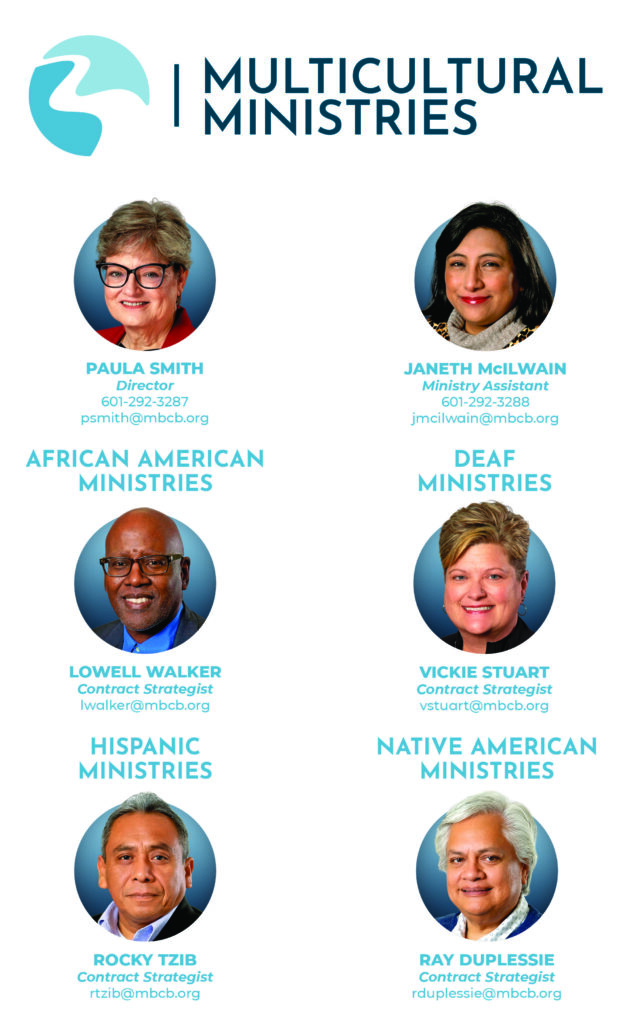
Looking ahead to Racial Reconciliation Sunday, the Multicultural Ministries Department of the Mississippi Baptist Convention Board led a conversation in taking steps as ministers and church members to reconciliation:
“There is a big gap in knowing each other,” said Pastor Lowell Walker from Mt. Sinai Baptist Church, Tupelo. Until we build relationships, which is “a process that comes from learning each other,” insensitivity and stereotypes, both conscious and unconscious, will continue to divide our churches.
Ray Duplessie, pastor of Fernwood Baptist Church, Gulfport, reminded that “all relationships require effort, and the same goes for relationships with other ethnic groups.” That effort looks like:
- Being open to learn. Ask God to make you aware of assumptions or generalizations you might have about other ethnicities. Assumptions close our minds off to learning. Overcoming misunderstandings takes humility and an open mind.
- Taking on a mindset of partnership. Acts of charity to a church, community, or minister of another background may come from a place of compassion, but if the donation was not requested, what was meant to be a gift can come off as unintentionally demeaning, even if the receiving party is less financially lenient. Instead of acting as a provider, set out to be a partner, especially as believers in ministry.
- Seeing people as Christ sees them. God created every man and woman in His image. Although humankind is tainted with sin, God still looked on us with love and gave His Son to die for us, a sacrifice none of us deserve. It is good to remind ourselves that we are all sinners, and we who have been born again are called to love our neighbor — everybody — as ourselves.
- Embracing each other’s diversity. God created each soul to dwell in a living, functioning body. Each different part of that body was made to play a role in sustaining life and keeping the whole healthy. Likewise, God created the Church, and we are diverse in our contributions to the Body of Christ. God created the world and everything He called good is diverse in its beauty — plants, animals, landscapes — including the diversity of humanity. A vital step to learning each other is embracing another person’s background and culture as a part of who they are are.
- Being intentional not to offend. Sometimes we let our assumptions speak ahead of ourselves. Sometimes we let out an offhand joke. A part of learning is being willing to apologize when that happens. The aim is not to walk on eggshells around each other, but to build merited trust.
Political Division
“One of the big drawbacks to building relationships with anyone is the political aspect,” said Walker. “Whoever you are affiliated with seems to have an effect on how you are going to do relationships, and here in Mississippi, that is very important. In that arena, in the arena of worshiping together, and in the community, build relationships and learn people without trying to bring them where you are. Meet them where they are.”
“When I talk to someone with different political beliefs,” Duplessie added, “I listen and learn a lot. Sometimes I’m in a mindset that something has to be a certain way, but then another point of view makes me reconsider that. I enjoy listening because I learn more when I hear different points of view.”
There is a time and place for political conversation, but in the Body of Christ, the point of everything is Jesus. He is the Way, the Truth, and the Life. Let us be willing to listen and learn, not to be indecisive and unstable, but to be humble and open to the will of God, which in its perfection cannot be completely framed by human philosophy.
Language Barriers
Rocky Tzib, pastor of Iglesia Bautista Cristo Vive in Pontotoc, and Vickie Stuart, member of The Way, Brandon, and Staff Interpreter for Mississippi Department of Rehab Services, are often asked how English-speakers can build relationships with Hispanic people and the Deaf.
“Love the Hispanic people,” Tzib responded simply. “How do you do that? With a smile. You don’t know Spanish? That’s okay; just love and care with a smile.”
“Love is a universal language,” said Stuart. “Hearing culture says, ‘Well I don’t know sign language.’ Just nod your head, smile, and wave your hand. A smile is an international gesture. A Deaf individual feels welcomed at your church when you see them and you look them in the eye. Don’t just wait for an interpreter. Step out of your comfort zone and don’t be afraid to make a mistake or not be able to communicate perfectly.”
Having Hard Conversations
You may know someone who is reluctant to consider reconciliation, and every time it is brought up, the conversation becomes antagonistic or stagnant. The Multicultural Ministries team shared four essential steps to having these hard conversations in a godly manner:
- Pray. Always pray for and seek God’s wisdom before or as these conversations come up. Start with Scripture: both for seeking God’s wisdom prior to having the conversation, and for leading the conversation.
- Love. Remember that we have all fallen short of the glory of God and that Christ loved us at our worst. Ask God to help you love this person as He loves them.
- Respect. Pushing boundaries or raising our voices will shut down any discussion. Listen to the other person when they speak and ask God to keep you calm.
- Wait. No amount of convincing can change a heart. Only God can transform a heart, in His timing. Our role is to obey what He calls us to do. Continue praying for the person.
“You need to be bathed in prayer,” said Duplessie, “and also live it out. We have to be consistent so when those conversations do come — because they will come — we have to be loving and we don’t need to be judgmental toward them, or else you will lose them. You need to be loving and non-confrontational, but you do need to point out what Christ says in His Word.”
“Understand that it’s a process,” said Walker, “because the human heart has been programmed to see it one way. The only way that people can see it God’s way is who they see in you. You’re going to be tried and tested, but you have to have patience and show that person love. Like Bro. Ray said, all of us should be about Christ and His Great Commission. If you do that, then maybe at some point in time, their heart becomes soft.”
“I don’t have to give up my belief for that individual,” Stuart added. “I don’t agree, but I can love. I can respect their boundaries in conversation, and I can set my own. I can pray, ‘God, You got this. I love (this person). You love (this person) more.”
“God is the only one who can change people’s hearts,” Tzib affirmed, “and you just have to leave it in God’s time. It is hard because you want people to love Jesus the way you love Jesus. But Paul couldn’t understand why the disciples loved Jesus until he met Jesus on the way to Damascus. Then his whole life changed and he was not the same. Then the people saw the change of how someone who once persecuted Christians was now one of them.”
For more information on Racial Reconciliation Sunday, click here: Racial Reconciliation Sunday 2026.