PHILADELPHIA (BP) — Scripture-engaged adults are more confident of their calling or purpose in life and thereby flourish, the American Bible Society (ABS) said in its latest release from the 2026 State of the Bible.
But those who are least engaged with the Bible often continue to seek a purpose or calling well into adulthood, and score lower on researchers’ flourishing scale, ABS said of findings released July 9 in the study’s fourth chapter.
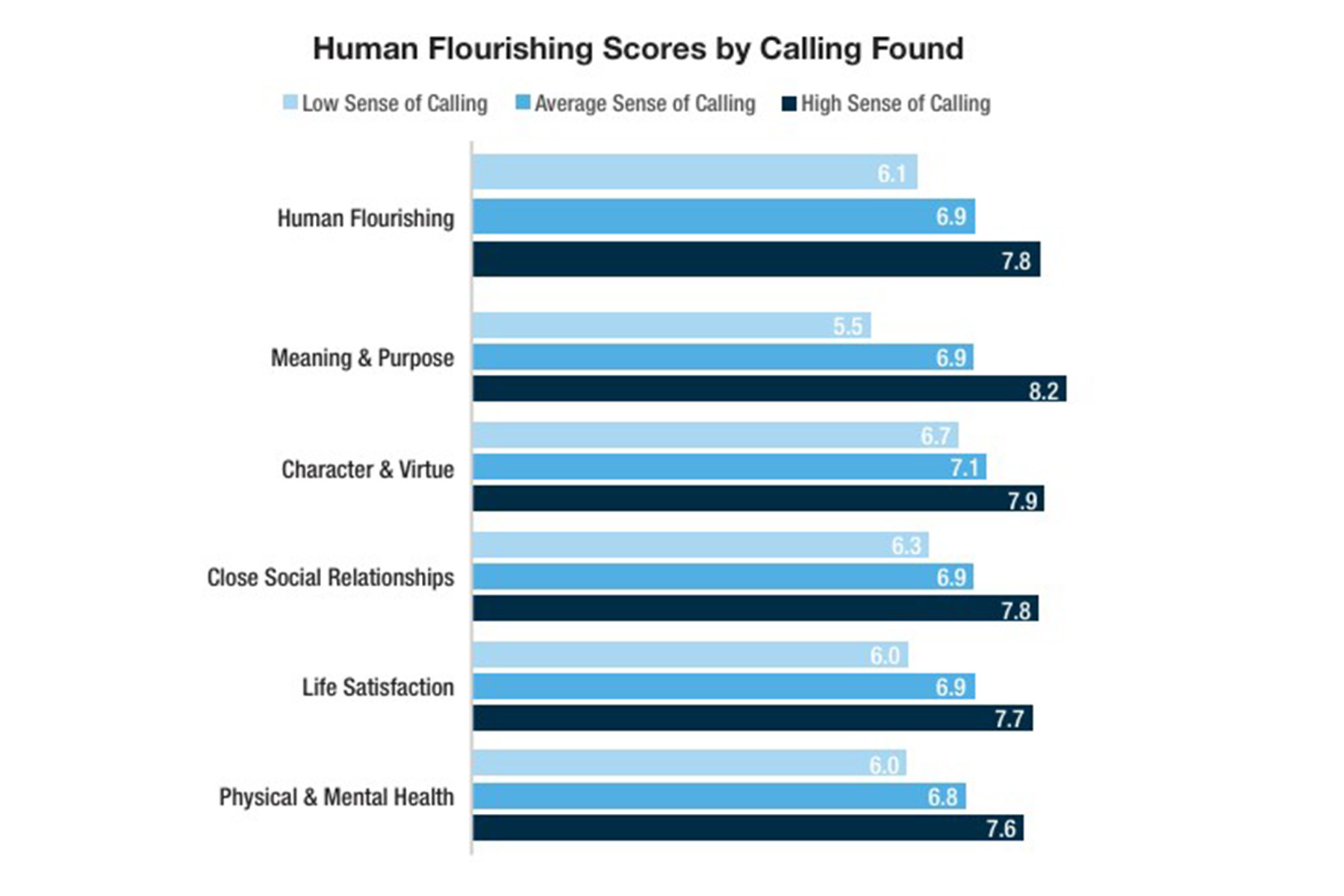
Adults with the strongest sense of calling score 7.8 on the human flourishing scale of 10, compared to a score of 6.1 among those with the lowest sense of calling, and also continue to flourish through life’s challenges.
Scripture engagement makes the difference, said John Plake, ABS chief Innovation officer and State of the Bible editor-in-chief.
“People with a strong sense of calling flourish more, and Scripture is at the heart of that connection,” Plake said. “And when life is disrupted by grief, job loss, or a serious illness, people who turn to Scripture find real comfort. Many don’t just endure the hardship; they come through it even stronger.”
Scripture-engaged adults report the highest confidence levels in their sense of calling, scoring 7.4 on researchers’ 10-point scale, compared to adults who don’t engage with Scripture, who scored 5.4 out of 10.
“People in the Movable Middle — open to the Bible and often curious about it but not committed — are the most likely to say they are searching for their calling,” researchers said in Chapter 4. “The Bible offers real insight to their big questions about life, purpose, and fulfillment.”
Scripture-engaged adults also view their calling as spiritual or inspired by God, ABS said, as Scripture records many examples of spiritual callings. The vast majority, 94 percent, of practicing Christians view the sense of calling from at least a somewhat spiritual lens, researchers said, compared to 70 percent of all Americans.
Evangelicals and Historically Black Protestants outpace others in finding their life’s calling, researchers said, with Mainland Protestants, Roman Catholics and religious Nones citing less confidence.
The 2026 State of the Bible marks the first time ABS has studied how Scripture-engagement impacts calling, pointing out that one’s calling is not always seen in spiritual terms, nor is exclusive to Christianity.
“The language itself begs a question: Who or what is calling me? Whether people believe that’s God or nature itself or their own soul, the term carries the suggestion that we are uniquely suited to perform some task that benefits others,” researchers wrote. “As Christian thinker Os Guinness put it in his book ‘The Call,’ ‘Deep in our hearts, we all want to find and fulfill a purpose bigger than ourselves. Only such a larger purpose can inspire us to heights we know we could never reach on our own. For each of us, the real purpose is personal and passionate: to know what we are here to do, and why.”
Delving into the topic, researchers relied on four questions from the Brief Calling Scale, exploring whether people had found or were still searching for their calling, and added a unique question exploring whether adults view one’s calling as spiritual.
Research findings are based on 2,649 online and phone interviews conducted Jan. 8-27, using the nationally representative AmeriSpeak panel fielded by NORC at the University of Chicago.
Download Chapter 4 here, and dive deeper with SOTB’s podcast featuring Bryan Dik, a professor of psychology at Colorado State University, and focused on the psychology of calling and vocation.